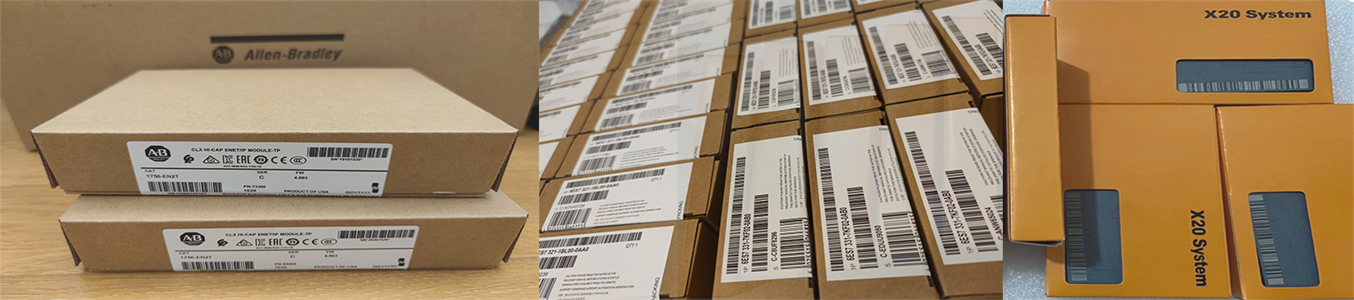
Siemens 6ES7953-8LL31-0AA0 Memory Card: Applications in DCS Systems, Advantages, and Replacement Guidelines
I. Which DCS Systems Use This Product?
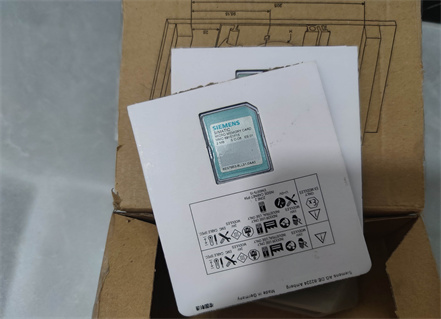
The “6ES7953-8LL31-0AA0” you mentioned is not a dedicated DCS (Distributed Control System) module, but rather a Micro Memory Card from the Siemens SIMATIC series. It is primarily used in the following PLC systems, which often serve as field control stations or stand-alone controllers within DCS architectures:
SIMATIC S7-300 Series PLC: Widely used in process control, manufacturing automation, and related fields.
SIMATIC ET 200 Series Distributed I/O Systems: Used as remote I/O stations in DCS applications.
SIMATIC C7 Series: Compact control systems.
Typical application industries include metallurgy (e.g., blast furnace dust removal systems), chemical, power generation, water treatment, automotive manufacturing, packaging machinery, and more.
II. Key Advantages of Choosing This Siemens Product
The core advantages of selecting the Siemens 6ES7953-8LL31-0AA0 micro memory card lie in its industrial-grade reliability and seamless system compatibility.
First and foremost, this memory card utilizes flash EPROM technology, making it a non-volatile memory device. This means that programs and data are permanently retained even after a power outage, eliminating the need for a backup battery to maintain data integrity. In contrast, many third-party or non-industrial memory cards rely on battery power to preserve data in RAM. If the battery fails or is not replaced in time, program loss can occur, leading to unplanned production interruptions.
Secondly, in terms of data retention period and read/write endurance, the Siemens original card demonstrates significant industrial-grade advantages. It offers a data retention time of over 10 years, far exceeding the typical 3 to 5 years found in standard memory cards. It also supports more than 100,000 read/write cycles, making it well-suited to withstand frequent debugging, program updates, and parameter modifications common in industrial environments—where standard cards are prone to bad blocks or data corruption under heavy use.
Third, this memory card is natively designed for SIMATIC S7-300, ET 200, and related control systems, achieving seamless integration at both hardware and software levels. Whether in STEP 7 Classic or the TIA Portal environment, the card is automatically recognized and operational without requiring additional drivers or configuration. This avoids the compatibility issues, recognition failures, or communication errors that may arise with third-party alternatives.
Lastly, the card features excellent adaptability to industrial environments. It is designed to withstand harsh operating conditions such as vibration, temperature fluctuations, and electromagnetic interference, ensuring long-term stable operation in demanding field environments. This fundamentally reduces the risk of unplanned downtime caused by storage medium failure.
III. Important Considerations When Replacing the Siemens 6ES7953-8LL31-0AA0
First, a critical clarification: the model number “6ES7953-BLL31-0AA0” you referenced does not exist in Siemens’ official product catalog. The correct ordering number is 6ES7953-8LL31-0AA0, with “8LL31” being the core identifier. If your existing device is labeled “BLL31,” this may be due to label wear or a documentation error. Be sure to verify the physical card’s model number before proceeding with replacement.
Key Replacement Precautions:
Power must be disconnected: This memory card does not support hot-swapping. Always power down the PLC system before replacing the card; failure to do so may result in CPU damage or program loss.
Back up the program first: Prior to replacement, use STEP 7 or TIA Portal software to fully upload and back up the program, hardware configuration, and system data from the original card.
Use the exact replacement model: Prioritize replacement with the identical 6ES7953-8LL31-0AA0 model to ensure proper capacity (2MB), electrical characteristics, and physical dimensions.
Re-download the hardware configuration: After inserting the new card, the backed-up program and hardware configuration must be downloaded to the CPU via the programming software; otherwise, the CPU will not operate correctly.
Observe electrostatic discharge (ESD) precautions: Before handling the card, discharge any static electricity by touching a grounded metal object to prevent damage to sensitive electronic components.
Verify physical installation: Ensure the memory card is fully inserted into the slot and securely locked. Poor contact can result in system startup failure or operational downtime.
 Address: WING INDUSTRY BLDG 3, TSUN WEN ROAD, TUEN MUN NT, HONG KONG
 Tel: +86 19116398948
 Email: sh_plc@163.com
 Contact: Vivi Wong