On August 29, 2025, ABB India announced that it had secured an order worth INR 1.7355 billion from Siemens Renewable Energy to supply wind turbine converters and electrical cabinets.
A regulatory filing revealed that the monthly deliveries for this order are scheduled to commence in January 2026 and continue through December 2026. The company stated: "ABB India Limited accepted an order on August 28, 2025, at 7:00 PM Indian Standard Time from Siemens Renewable Energy Private Limited for the supply of wind turbine converters and electrical cabinets." The total value of the order is INR 1.7355 billion.
In its filing with the stock exchange, the company described the order as a "supply order," requiring the production and delivery of 3.X wind turbine converters and electrical cabinets based on a build-to-print model. The work will be carried out at ABB India’s facility in Nelamangala.
Following the announcement, ABB’s stock price rose more than 1% in early trading but ultimately closed largely flat. Market caution was largely attributed to the company’s recent pressured financial performance. Earlier this month, ABB India reported its second-quarter results for the 2025 calendar year. The company posted a net profit of INR 3.517 billion, down 20.5% year-on-year from INR 4.435 billion in the same period last year. Its earnings before interest, taxes, depreciation, and amortization (EBITDA) for the April–June quarter also saw a significant decline, falling 27% year-on-year to INR 4.41 billion. The EBITDA margin dropped to 13% from 19.2% in the same quarter last year.
However, the company’s revenue for the second quarter of the 2025 calendar year increased by 12.2% to INR 31.754 billion, compared to INR 28.31 billion in the same period of the previous fiscal year. Commenting on the performance, a Director of ABB India said: "Despite the impact of foreign exchange fluctuations and one-time events on profitability this quarter, we achieved a double-digit net profit margin for the 11th consecutive quarter."
From an industry perspective, this order not only demonstrates ABB’s capabilities in electrification and automation but also represents a strategic move in the wind power sector. For ABB, this could serve as key leverage to alleviate profit pressures and stabilize market confidence. For Siemens’ wind energy business, this in-depth collaboration with ABB signifies stronger supply chain support in the global wind energy market competition.
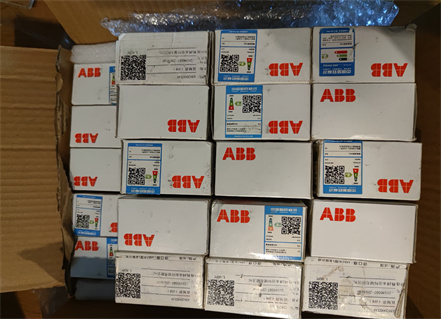
In short, the substantial order value and clear delivery timeline have sent a positive signal to the market. However, whether ABB can truly emerge from the shadow of declining profits will depend on its execution capabilities in the coming quarters and the overall industry conditions.
 Address: WING INDUSTRY BLDG 3, TSUN WEN ROAD, TUEN MUN NT, HONG KONG
 Tel: +86 19116398948
 Email: sh_plc@163.com
 Contact: Vivi Wong