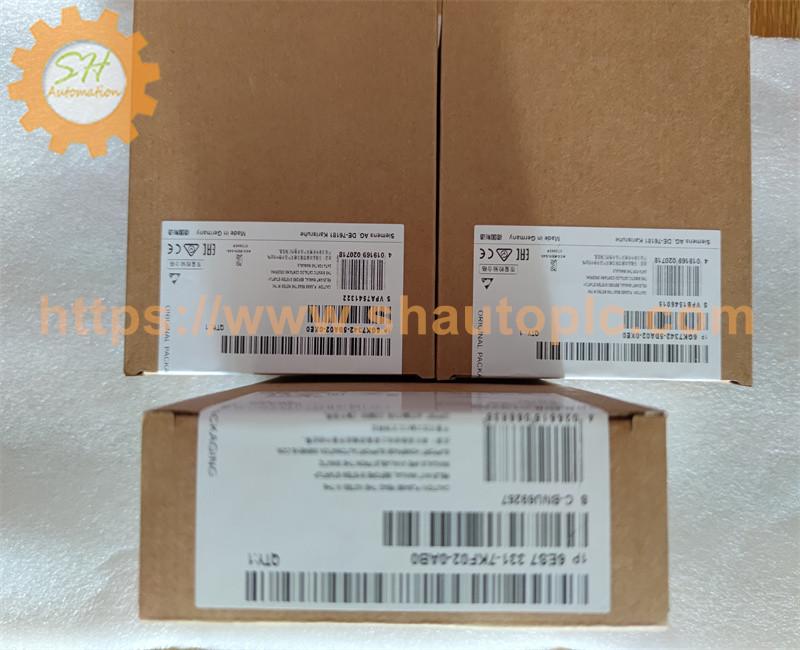
Siemens 6GK1503-3CD00: Condition is New Original . Warranty is 12 months. Payment Method is T/T payment.
Lead time is 1-2 days. We use DHL, UPS, TNT, FedEx and EMS to deliver your cargo door to door.
For actual picture or technical specification, contact with us via email.
Item NO.:
Siemens 6GK1503-3CD00Order(MOQ):
1Payment:
100% T/TProduct Origin:
GermanyDelivery Time:
2 daysWarranty:
12 monthsProduct Description:
Siemens PROFIBUS OLM/G12-EEC Fiber Optic Link Module
This Siemens PROFIBUS OLM/G12-EEC Fiber Optic Link Module (6GK1503-3CD00) is not a simple signal converter; it is an industrial-grade fiber optic communication device specifically designed to completely solve the communication stability problems of PROFIBUS DP fieldbuses over long distances and in strong electromagnetic interference environments. It directly addresses the core pain points of communication interruptions, data errors, and node dropouts that occur with standard RS-485 copper-wire PROFIBUS networks in large factories, cross-building layouts, outdoor installations, and other scenarios due to limited transmission distance (max 1.2 km per segment), susceptibility to EMI, and inability to traverse lightning-prone or high-potential-difference areas.
This module converts PROFIBUS electrical RS-485 signals into optical signals for transmission over glass fiber, achieving galvanic isolation and long-distance reliable communication. With its dual-channel fiber optic interfaces (4 BFOC ports) and wide operating temperature range (-20°C to +60°C), the module can build linear, star, or even redundant ring topologies, significantly improving the system availability of critical automation networks and their immunity to interference. It ensures that your S7-300/400 PLCs, ET 200 distributed I/O stations, drives, and other PROFIBUS devices achieve error-free, low-latency real-time data exchange even in harsh industrial environments.
Specific Application Scenarios:
1.Cross-Building Network Interconnection in Large Factories
In large factories such as automotive manufacturing, steel/metallurgy, and heavy machinery, the control room can be hundreds of meters or even kilometers away from field devices. Deploying the 6GK1503-3CD00 at both ends and connecting PROFIBUS segments across buildings via glass fiber easily exceeds the 1.2 km physical limit of copper cables, while also eliminating the potential impact of ground potential differences between buildings.
2.Power Plants & Substation Monitoring Systems
In strong EMI environments such as coal-fired power plants, gas turbine power stations, and substations, high-current switching operations and high-voltage equipment generate intense electromagnetic radiation. The 6GK1503-3CD00 achieves complete galvanic isolation via fiber optic transmission, making PROFIBUS communication completely immune to EMI, ensuring accurate data acquisition and control commands for critical processes like generator excitation, boiler auxiliaries, and coal handling.
3.Petrochemical & Hazardous Areas
In outdoor areas of refineries and chemical plants (tank farms, pump houses), equipment is distributed over large areas and exposed to harsh conditions (heat, corrosion, lightning risk). The wide operating temperature range of the 6GK1503-3CD00 ensures stable operation in both summer heat and winter cold. Fiber optics are inherently non-conductive, making them an ideal choice for lightning-prone areas (lightning strikes are not conducted along fiber). The EEC version is specifically designed for outdoor climatic conditions in the European Economic Area.
4.Automotive Manufacturing – Welding Shop
In car body welding shops, the high-frequency electromagnetic noise generated by welding robots severely interferes with copper-wire PROFIBUS communication. The 6GK1503-3CD00 converts the PROFIBUS network of the welding line to fiber optic transmission, completely eliminating the impact of EMI on communication, ensuring real-time reliability of robot control commands and status feedback.
5.Large Buildings & Infrastructure (Airports, Subways, Water Treatment)
In airport baggage handling systems, subway environmental control systems, and large water/wastewater treatment plants, control points are spread over wide areas. The 6GK1503-3CD00 constructs a fiber optic ring network: even if a single point of fiber fails, data is still transmitted via the other direction of the ring, guaranteeing high system availability and preventing system paralysis caused by a single communication failure.
Comparisons & Advantages
1.Core Difference Between OLM/G12 and OLM/G11 – The Decisive Factor for Network Topology
Within the Siemens PROFIBUS OLM product family, G12 and G11 serve two fundamentally different roles – understanding this difference is critical for correct selection. G11 represents one RS-485 electrical interface and one fiber optic interface (single channel). Because it has only one fiber interface, it cannot “forward” the optical signal; it can only be placed at the head or end of a PROFIBUS segment for conversion between that segment and a fiber link. In contrast, the 6GK1503-3CD00, as a G12 model, provides one RS-485 electrical interface and two independent fiber optic interfaces (dual channel). These two fiber interfaces allow the module to “receive” an optical signal from one direction and “forward” it to the fiber link in the other direction, meaning it can be placed anywhere in the middle of a PROFIBUS fiber optic network to build linear daisy-chained (bus) or star networks. In short, in a fiber bus consisting of multiple OLMs, the OLMs at the two ends can be G11, but all OLMs in the middle positions must be G12 – only G12 has the dual-fiber “relay” capability to continue passing communication to the next node. Correctly understanding this distinction is essential for the fiber network to communicate properly.
2.Positioning Difference Compared to Hirschmann OZD Profi G12
When compared to Hirschmann’s OZD Profi G12 series fiber optic repeaters, the two are highly similar in function – both convert PROFIBUS electrical signals to optical signals for transmission. However, the core advantage of the 6GK1503-3CD00 lies in its deep integration with Siemens automation systems and engineering consistency. Hirschmann, as an independent network equipment supplier, excels in versatility and compatibility and can be integrated into PROFIBUS networks of any brand. The 6GK1503-3CD00, as a member of the SIMATIC NET product family, achieves seamless integration with the Siemens STEP 7/TIA Portal engineering platform. Engineers can directly configure and diagnose PROFIBUS network parameters (baud rate, station addresses, bus parameters) within STEP 7 without switching to third-party software. For projects where Siemens PLCs are the core control system, this integration means faster commissioning, lower engineering risk, and a unified technical support interface. Additionally, some domestic Chinese third-party brands (e.g., Shenzhen Xunjie, Yantai Gougu) offer functionally compatible PROFIBUS fiber optic repeaters at lower prices. However, differences exist in long-term stability and after-sales technical support compared to Siemens original products. The choice depends on the reliability requirements of the project.
3.Comparison with PROFIBUS Repeater + Extended Cable Solutions
For long-distance PROFIBUS communication, one alternative is to cascade multiple PROFIBUS Repeaters (e.g., 6ES7972-0AA01-0XA0) to extend copper cable distance. Each repeater can extend a segment by up to 1.2 km; theoretically, cascading multiple repeaters can achieve even longer distances. However, this solution has significant limitations: each repeater stage adds bit-time delay, and as the number of cascaded stages increases, the accumulated delay may cause PROFIBUS timing violations and communication instability. More critically, copper-based PROFIBUS can never solve EMI or ground potential difference issues. In contrast, the 6GK1503-3CD00 uses fiber optic transmission, which has no electrical interference problems and is immune to ground potential differences, and fiber attenuation is extremely low – single-mode fiber can reach tens of kilometers without repeaters. Choosing the OLM/G12 fiber solution is a “fundamental cure” for communication problems in long-distance, high-interference scenarios.
You may wanna to know before purchasing
Q1: What network topologies does the 6GK1503-3CD00 support?
A: The module supports linear, star, and redundant ring topologies. In a linear topology, multiple G12 modules are connected in series via fiber, with the PROFIBUS electrical ports at each end connected to their respective segments. In a star topology, one G12 module acts as the central node, using its two fiber channels to connect to different G11/G12 modules, radiating outward. In a redundant ring topology, the ends of a linear network are connected to form a ring. If a fiber break occurs at any point on the ring, communication automatically recovers via the other direction (switchover time typically <0.3 s), greatly improving system availability. This is a key difference from the single-fiber-channel G11 – only G12’s dual-fiber capability enables ring topology.
Q2: Can G11 and G12 be mixed together? How should they be configured?
A: Yes, they can be mixed, but with strict restrictions. In a fiber optic network composed of multiple OLMs, the OLMs at the two ends of the network can be the lower-cost G11 (because they only need one fiber channel to connect to the next node), while all intermediate OLMs in the network must be G12 (because they need to connect to both the previous and next fiber nodes). G11 can only appear at the start or end of the network, never in the middle. Also, OLMs using different fiber types cannot be mixed on the same bus – i.e., a multimode glass fiber OLM (e.g., 6GK1503-3CD00, wavelength 860 nm) cannot be mixed with single-mode or 1300 nm wavelength OLMs. After confirming the communication distance, it is best to purchase the same model of OLM to ensure compatibility.
Q3: What are the physical dimensions, weight?
A: The module has a net weight of approximately 0.425 kg and package dimensions of 39.50 x 74.50 x 112.00 mm.
Q4: What should be noted when configuring DIP switches on the OLM module? How to troubleshoot common faults?
A: DIP switch configuration is the most error-prone step in OLM installation. Basic rules and troubleshooting methods are as follows:
- Baud Rate Setting: DIP switches S1 to S4 set the PROFIBUS baud rate. All OLM modules and all stations on the PROFIBUS network must be set to exactly the same baud rate. Common rates: 12 Mbit/s, 1.5 Mbit/s, 500 kbit/s, etc. Refer to the product manual for the rate-to-switch mapping.
- Topology Mode Setting: Set the DIP switches according to the network topology (linear, ring) as per the manual.
- Termination Resistor: The termination resistor switch on the PROFIBUS electrical port (9-pin Sub-D) of the OLM must be set to “ON” on the OLMs at the physical ends of the network.
Common fault troubleshooting:
- CH2 LEVEL LED red: Indicates insufficient received optical power on that fiber channel. This is usually caused by dirty or loose fiber connectors, too-tight bend radius, excessive fiber attenuation, or fiber length exceeding the module’s specification. Solution: clean the BFOC connector end-face with anhydrous alcohol, re-insert firmly, and check the fiber routing.
- BF LED flashing: Indicates a PROFIBUS bus fault, usually caused by incorrect bus parameter settings, improper termination resistor configuration, or wiring errors on the electrical port.
- Module does not power up: Check if the 24 V DC power polarity is correct and whether the supply voltage is within 18.8-28.8 V.
- Fiber link does not work but LEDs are normal: Possibly the fiber transceiver directions are reversed – the T (transmit) on the OLM fiber port must connect to the R (receive) on the remote OLM, and vice versa. Check the T/R correspondence.
Q5: What are the differences between 6GK1503-3CD00, 6GK1503-3CB00, and 6GK1503-3CC00?
A: All three belong to the PROFIBUS OLM/G12 series. The difference lies in fiber wavelength and transmission medium:
- 6GK1503-3CD00: Uses 860 nm wavelength for multimode glass fiber, max distance 3 km. It is the standard G12-EEC version with wide temperature range (-20°C to +60°C). The EEC version is specially suited for European Economic Area climatic conditions.
- 6GK1503-3CB00: Uses 1310 nm wavelength for single-mode fiber, corresponding to OLM/G12-1300 V4.0, with much longer transmission distance (typically 10-15 km or more).
- 6GK1503-3CC00: Also uses 1310 nm wavelength and belongs to the OLM/G12-1300 series. It is functionally similar to -3CB00 but may have minor differences in technical specifications or certifications.
Selection principle: For short distances (<3 km) and existing multimode fiber infrastructure, choose 6GK1503-3CD00. For long distances (>3 km) or new fiber infrastructure, choose the 1300 series single-mode model.
Q6: Is this product discontinued? What are the recommended replacement models?
A: As of current information, the product lifecycle status of 6GK1503-3CD00 is PM300: Active Product – not yet announced as discontinued. If Siemens introduces replacements in the future, possible alternatives include:
- SCALANCE X series media converters: e.g., 6GK5101-1BB00-2AA3, which are primarily for Industrial Ethernet but could serve as fiber repeaters in some applications.
- Domestic third-party alternatives: e.g., Shenzhen Xunjie Ci-pf110/120 series, Yantai Gougu NS21 series. These products are functionally compatible with Siemens OLM-G12, support PROFIBUS-DP protocol, have adaptive baud rates from 0 to 12 M, and are typically priced lower than original products. When choosing alternatives, focus should be on long-term operational stability and after-sales support capabilities. For critical process control applications, it is strongly recommended to continue using Siemens original OLM products to ensure system reliability.
How can I verify the product I receive is genuine?
We promise this 6GK1503-3CD00 is 100% brand new original commodity
1. Visual Inspection: Genuine modules feature excellent craftsmanship, clear printing, uniform coloring, and tight-fitting connectors.
2. Label Verification: Check that the order number (6GK15033CD00) and serial number (S/N) on the module label are clear and unique.
3. Functional Test: Connect using official Siemens software; it should correctly read the module type, serial number, and firmware information.
4. Official Channels: If in doubt, consult Siemens directly using your purchase proof and product serial number.

More deacriptions of this Items:
promotional 6GK1503-3CD00
new 6GK1503-3CD00
new arrival 6GK1503-3CD00
wholesale 6GK1503-3CD00
6GK1503-3CD00 price
data sheet 6GK1503-3CD00
Factory New 6GK1503-3CD00
manufacturer 6GK1503-3CD00
hot sell 6GK1503-3CD00
diagram 6GK1503-3CD00
stocked 6GK1503-3CD00
brand new 6GK1503-3CD00
distributor 6GK1503-3CD00
new original 6GK1503-3CD00
wiring 6GK1503-3CD00
Authentic 6GK1503-3CD00
Supplier 6GK1503-3CD00
in stock 6GK1503-3CD00
6GK1503 - 3CDoo new in box
manual 6GK1503-3CDoo
Genuine 6GK15o33CDoo Fiber Optic Link Module
New Sealed 6GK15o3-3CDoo
SIMATIC NET PROFIBUS OLM/G12-EEC 6GK15033CD00 plc module
latest 6GK1503 - 3CD00 Fiber Optic Link Module
original 6GK1503 3CD00
in warehouse 6GK1-503-3CD00
retailer 6GK1 503-3CD00
factory sealed 6GK-1503-3CD00 SIMATIC NET PROFIBUS OLM/G12-EEC
factory 6GK 1503-3CD00 SIMATIC NET PROFIBUS OLM/G12-EEC Fiber Optic Link Module


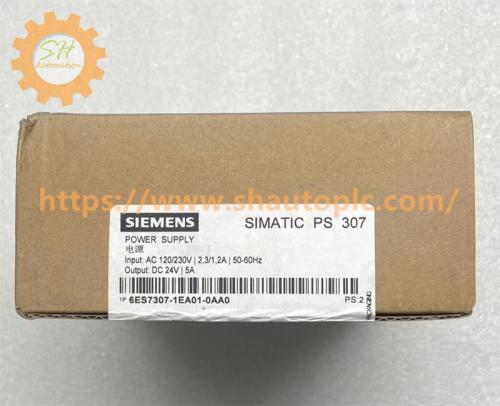
sh_plc@163.com Siemens 6ES7307-1EA01-0AA0 power supply PS307 : Condition is New Original . Warranty is 12 months. Payment Method is T/T payment. Lead time is 1-2 days. We use DHL, UPS, TNT, FedEx and EMS to deliver your cargo door to door. For actual picture or technical specification, contact with us via email.
Learn More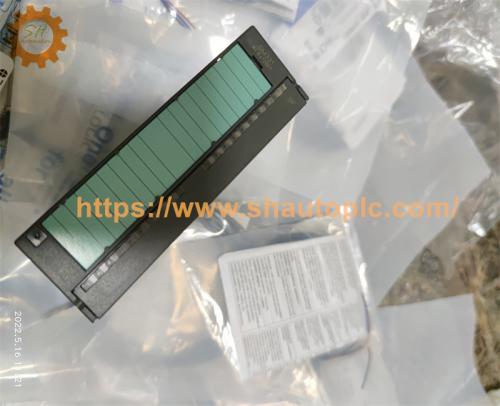
sh_plc@163.com Siemens 6ES7307-1BA00-0AA0 SIMATIC S7-300 : Condition is New Original . Warranty is 12 months. Payment Method is T/T payment. Lead time is 1-2 days. We use DHL, UPS, TNT, FedEx and EMS to deliver your cargo door to door. For actual picture or technical specification, contact with us via email.
Learn More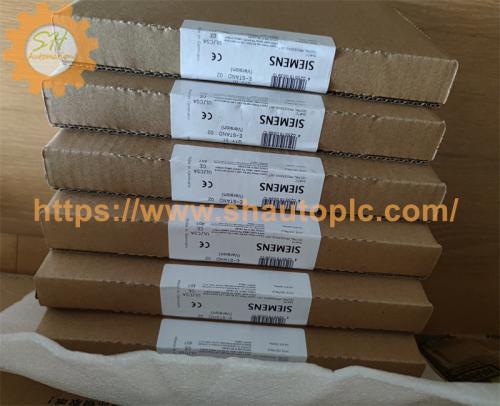
sh_plc@163.com Siemens 6ES7315-2EH14-0AB0 : Condition is New Original . Warranty is 12 months. Payment Method is T/T payment. Lead time is 1-2 days. We use DHL, UPS, TNT, FedEx and EMS to deliver your cargo door to door. For actual picture or technical specification, contact with us via email.
Learn More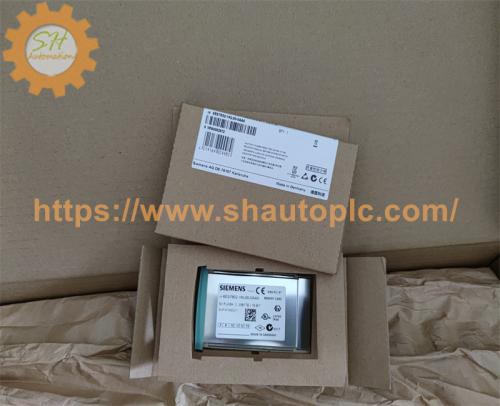
sh_plc@163.com Siemens 6ES7307-1KA01-0AA0 SIMATIC S7-300 : Condition is New Original . Warranty is 12 months. Payment Method is T/T payment. Lead time is 1-2 days. We use DHL, UPS, TNT, FedEx and EMS to deliver your cargo door to door. For actual picture or technical specification, contact with us via email.
Learn More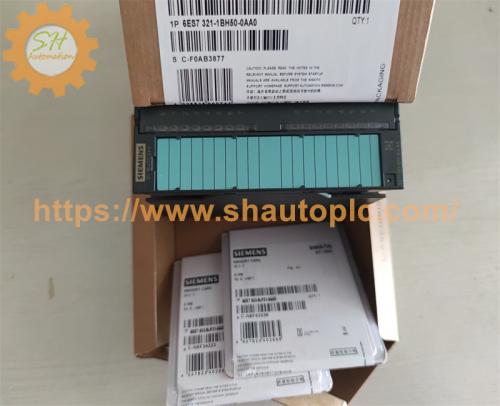
sh_plc@163.com Siemens 6ES7314-6CG03-0AB0 SIMATIC S7-300 : Condition is New Original . Warranty is 12 months. Payment Method is T/T payment. Lead time is 1-2 days. We use DHL, UPS, TNT, FedEx and EMS to deliver your cargo door to door. For actual picture or technical specification, contact with us via email.
Learn More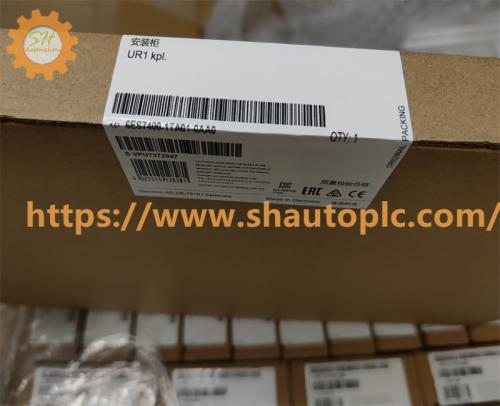
Siemens 6ES7321-1BL00-0AA0 SIMATIC S7-300, Digital input SM 321, Isolated 32 DI, 24 V DC, 1x 40-pole 6ES7321-1BL00-0AB0
Learn More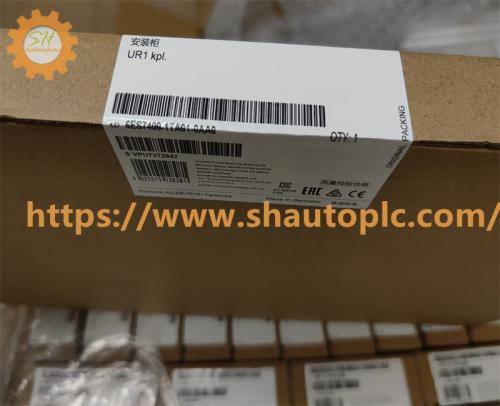
sh_plc@163.com Siemens 6ES7331-1KF02-0AB0 : Condition is New Original . Warranty is 12 months. Payment Method is T/T payment. Lead time is 1-2 days. We use DHL, UPS, TNT, FedEx and EMS to deliver your cargo door to door. For actual picture or technical specification, contact with us via email.
Learn More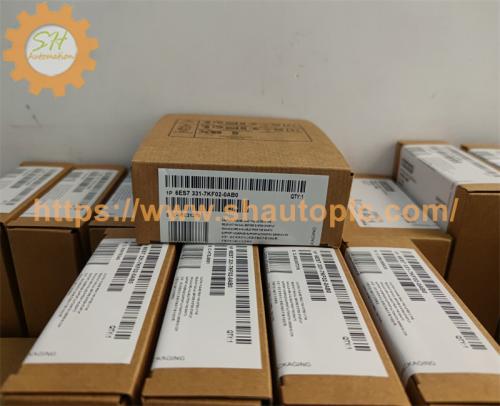
sh_plc@163.com Siemens 6ES7407-0KA02-0AA0 SIMATIC S7-400 : Condition is New Original . Warranty is 12 months. Payment Method is T/T payment. Lead time is 1-2 days. We use DHL, UPS, TNT, FedEx and EMS to deliver your cargo door to door. For actual picture or technical specification, contact with us via email.
Learn More Address: WING INDUSTRY BLDG 3, TSUN WEN ROAD, TUEN MUN NT, HONG KONG
 Tel: +86 19116398948
 Email: sh_plc@163.com
 Contact: Vivi Wong