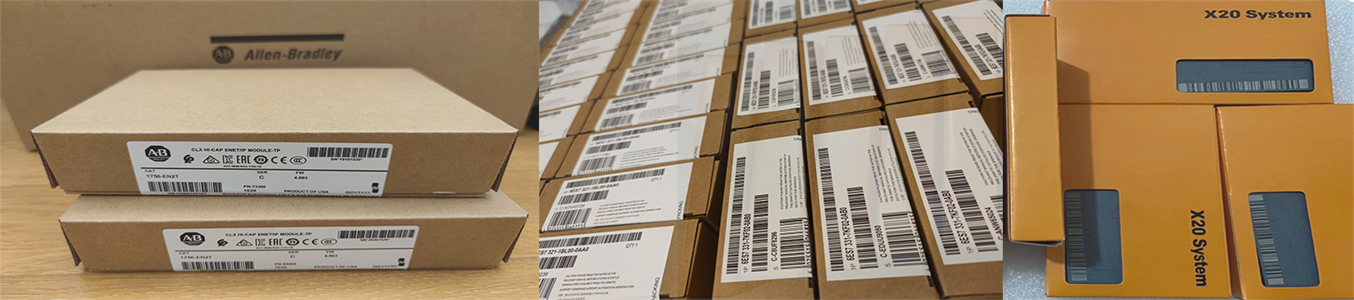
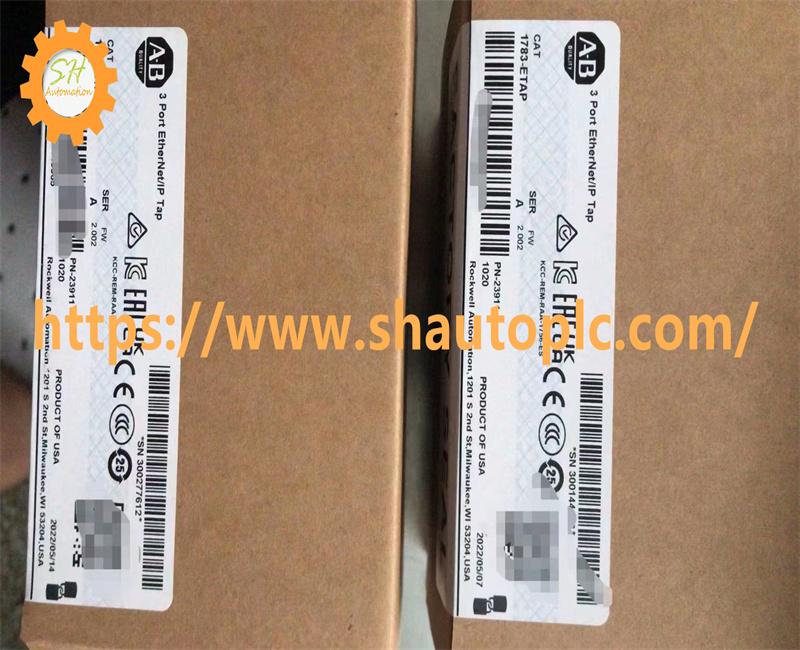
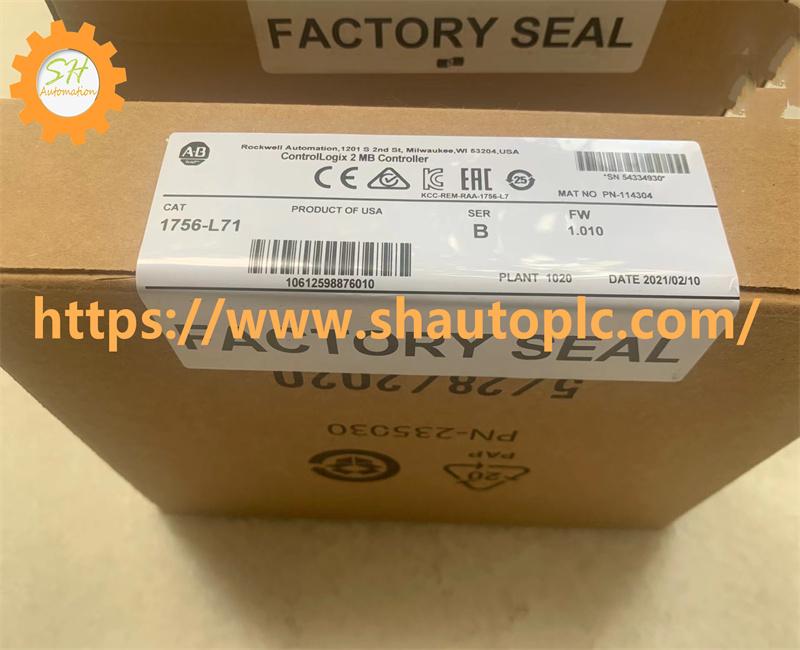
Allen Bradley 1715-IB16D: Condition is New Original . Warranty is 12 months. Payment Method is T/T payment.
Lead time is 1-2 days. We use DHL, UPS, TNT, FedEx and EMS to deliver your cargo door to door.
For actual picture or technical specification, contact with us via email.
Item NO.:
Allen-Bradley 1715-IB16DOrder(MOQ):
1Payment:
100% T/TProduct Origin:
the USADelivery Time:
2 daysWarranty:
12 monthsProduct Description:
Allen‑Bradley 1715‑IB16D 16‑channel digital input module
The Allen‑Bradley 1715‑IB16D 16‑channel digital input module is not a standard I/O module, but
a fault‑tolerant digital acquisition unit engineered to eliminate signal loss risks caused by single‑
point I/O failures in critical control systems. It directly resolves core pain points in critical process
control applications such as petrochemical, power generation, and pharmaceutical manufacturing
where unplanned shutdowns are prohibited—including loss of critical interlock signals, inadvertent
safety system actuation, and interrupted batch data due to single input failure, module fault, or
field wiring issues.
Supporting simplex/duplex configurable architecture and individually isolated input channels,
this module enables your ControlLogix PAC to continuously and reliably acquire discrete signals
from field sensors, switches, and pushbuttons, raising system availability above 99.9%.
A.Primary Application Fields:
Refining and Oil & Gas Production:In atmospheric and vacuum distillation, catalytic cracking,
and other process units, critical safety interlock signals including emergency stop buttons, pressure
switches, and level switches must be absolutely reliable.
The 1715‑IB16D deployed in duplex mode uses two identical input modules mounted in pairs, with
signals processed via 1‑out‑of‑2 voting or 2‑out‑of‑2 comparison through the adapter pair.
If one module fails, it can be replaced via online hot‑swap without signal interruption, completely
avoiding unit‑wide interlock shutdowns caused by single I/O point failures.
Pharmaceutical and Biotechnology:On batch production lines compliant with FDA 21 CFR Part 11,
continuity and traceability of process data are essential for validation and auditing.
The timestamping function of the 1715‑IB16D captures the precise moment of state change (ON→
OFF or OFF→ON) for each input channel, providing millisecond‑resolution event logs for batch
reports and ensuring complete audit trail integrity.
Power Generation and Grid Auxiliary Services:In gas turbine intake filtration systems and flue‑
gas desulfurization/denitrification CEMS monitoring stations, environments feature high vibration
and strong electromagnetic interference.
The 1715‑IB16D offers vibration resistance of 2g @ 10–500Hz and 6kV contact discharge ESD
immunity, ensuring accurate signal acquisition in harsh EMI environments.
Per‑channel galvanic isolation effectively prevents field wiring faults from propagating to the
entire system.
Mining and Heavy Machinery:In geographically dispersed assets such as conveyor systems and
crushing stations, remote I/O stations are located far from control rooms.
The 1715‑IB16D supports an extended operating temperature range of ‑25°C to +70°C, allowing
deployment in unheated outdoor cabinets.
Paired with the 1715‑AENTR redundant adapter, it enables reliable signal acquisition at remote
I/O stations up to 15 km away.
B.vs. Standard Non‑Redundant I/O (e.g., 1756 Series)
Many engineers are familiar with ControlLogix 1756 I/O modules, but the 1715‑IB16D addresses
a fundamentally higher level of system reliability.
Standard 1756 I/O modules such as the 1756‑IB16 are designed for general control; module failure
requires shutdown and replacement, causing production downtime.
The 1715‑IB16D is fault‑tolerant I/O for critical process control, supporting duplex redundant
operation: two identical modules install in adjacent slots and share field signals via a common
terminal base.
If one module fails, the other takes over seamlessly, and the faulty unit can be hot‑swapped
without system shutdown.
This is not merely a functional difference—it is the fundamental distinction between scheduled
maintenance windows and unplanned production outages.
C. vs. Siemens ET 200SP HA Digital Input Modules
Compared with Siemens ET 200SP HA modules (e.g., 6ES7131‑6BH01‑0BA0), redundancy archi-
tectures differ significantly.
ET 200SP HA provides communication redundancy via PROFINET media redundancy and system
redundancy (S2), but I/O modules operate in simplex.
The 1715‑IB16D delivers module‑level hot fault tolerance. In duplex mode, two modules simulta-
neously receive the same field signal, process independently, and send status to the controller.
In short: the Siemens solution provides communication path redundancy with single points of
failure at the I/O module; the 1715‑IB16D provides fully redundant signal acquisition paths where
any single module failure does not affect system operation.
For SIL 2 safety interlock applications, this module‑level redundancy is mandatory to achieve Hard-
ware Fault Tolerance (HFT = 1).
D:vs. Schneider Quantum EIO Redundant I/O: Schneider Quantum EIO also supports redundant
I/O, but relies on proprietary backplanes and dedicated racks, resulting in a relatively closed
architecture.
The unique advantage of the 1715‑IB16D is its decoupled, modular redundant I/O design, supporting
flexible simplex or duplex configuration within the same rack based on signal criticality.
Non‑critical signals (e.g., status indicators) can use simplex mode to reduce cost; critical interlock
signals use duplex mode for maximum availability.
This flexibility allows precise control of return on investment without requiring full‑system high‑
level redundancy.
E.What is the difference between simplex and duplex mode for the 1715‑IB16D?
How should I choose?
Simplex mode: One 1715‑IB16D operates independently; its signals are read by both redundant
adapters, but the module itself is a single component.
Duplex mode: Two identical 1715‑IB16D modules operate in pairs; signals are processed via 1‑out‑
of‑2 voting or 2‑out‑of‑2 comparison through the adapter pair.
Selection guideline:
Simplex is sufficient for non‑critical monitoring (e.g., run indicators).
Duplex is mandatory for critical safety interlocks (e.g., ESD, high‑pressure alarms) to achieve hard-
ware redundancy.
In duplex mode, one module can be hot‑swapped while the other continues operating without
interruption.
F:Must this module use a specific terminal base? What options are available?
Yes, the 1715‑IB16D requires a 1715‑series terminal base; direct wiring is not supported.
Two options:
- 1715‑TASIB16D: Simplex terminal base for simplex configurations (no channel‑to‑channel isolation).
- 1715‑TADIB16D: Duplex terminal base for duplex configurations, providing 50V channel‑to‑channel isolation.
Using an incorrect terminal base will prevent proper redundancy or isolation performance.
G:What diagnostic features does the module provide?
The 1715‑IB16D integrates comprehensive self‑diagnostics and independent watchdog functions.
Advanced diagnostics include:
- Real‑time input voltage monitoring for field wiring and fault detection
- Per‑channel timestamping of state changes (ON→OFF / OFF→ON)
- Continuous internal self‑testing with fault reporting to the controller via adapters
Diagnostics are visible in Studio 5000 and can be displayed on HMI for predictive maintenance.
H: Does the module support hot‑swap? Will replacement affect field signals?
Yes, online hot‑swap is supported.
Behavior depends on operating mode:
- Simplex: Module can be replaced online, but signal acquisition is temporarily interrupted.
- Duplex: One module can be removed and replaced without signal loss; the remaining module maintains operation.
Duplex configuration is strongly recommended for non‑stop critical processes.
I:What are the power and cooling requirements?
The 1715‑IB16D has a maximum system power consumption of 4.0W, with 0.2W per field loop.
Heat dissipation is extremely low. A full 1715 rack (2 adapters + multiple I/O modules) generates
far less heat than a standard industrial switch.
No additional cooling modifications are required. Natural convection within the cabinet is sufficient
across the ‑25°C to +70°C operating range.
J: What wiring and fuse requirements apply?
Wiring: 0.33–1.5 mm² (22–16 AWG) solid or stranded copper wire, insulation rated 85°C or higher.
- Fuse: 125V, 50mA time‑lag (T‑type) fuse.
Incorrect fusing may cause module damage or loss of overcurrent protection.
K:Is the module suitable for SIL 2 safety applications? What configuration is required?
Yes. The complete 1715 system (including 1715‑IB16D) is TÜV certified to IEC 61508 for use in SIL 2
safety‑related applications.
Critical requirement: SIL 2 compliance mandates operation in duplex mode to achieve Hardware
Fault Tolerance (HFT = 1).
Simplex configurations are not suitable for safety interlock functions.
L. How to Identify a Reliable, High-Quality Siemens PLC Supplier
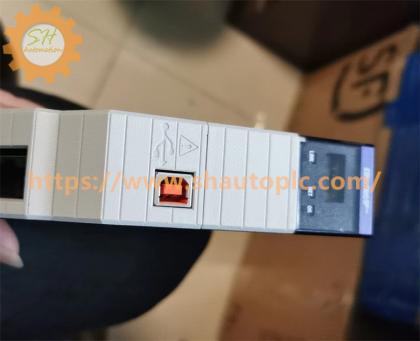
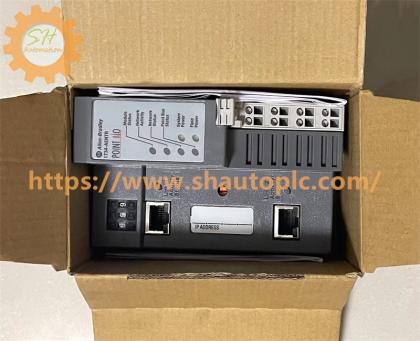
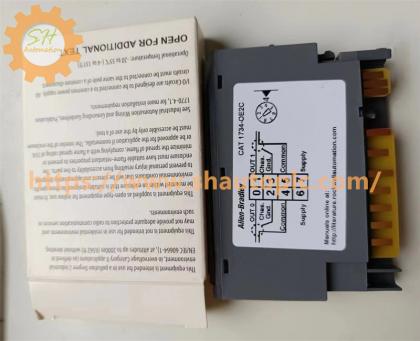
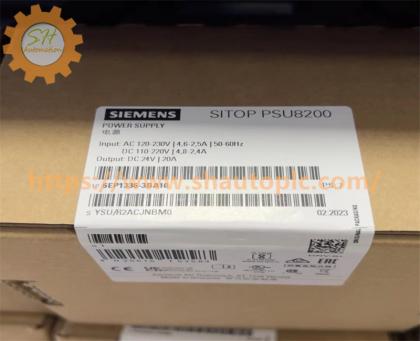
A trustworthy supplier proactively transparentizes all details. First, we provide multi-angle, high-
resolution photos of the actual product—including the housing, ports, and a close-up of the label
(clearly showing the order number 1715-IB16D)—rather than using only official website
images. Second, we clearly mark inventory status and are willing to provide stock proof. Finally, we
offer complete technical support and warranty services (12-month warranty) and can provide formal
procurement channel documentation, ensuring every device you receive is genuine and original.
M. Is this 1715-IB16D brand new and original? Is it in stock?
We guarantee that all Siemens PLC products we sell are 100% brand new and original. This model is a
common stock item and is currently available for immediate shipment.
N.What are the physical dimensions and weight of the product?
The module has a compact size of approximately 22.1 x 18 x 7 cm (W x H x D) and weighs about
0.29 kg.
O. How can I verify the product I receive is genuine?
1. Visual Inspection: Genuine modules feature excellent craftsmanship, clear printing, uniform coloring, and tight-fitting connectors.
2. Label Verification: Check that the order number (1715-IB16D) and serial number (S/N) on the module label are clear and unique.
3. Functional Test: Connect using official Siemens software; it should correctly read the module type, serial number, and firmware information.
4. Official Channels: If in doubt, consult Allen Bradley directly using your purchase proof and product serial number.

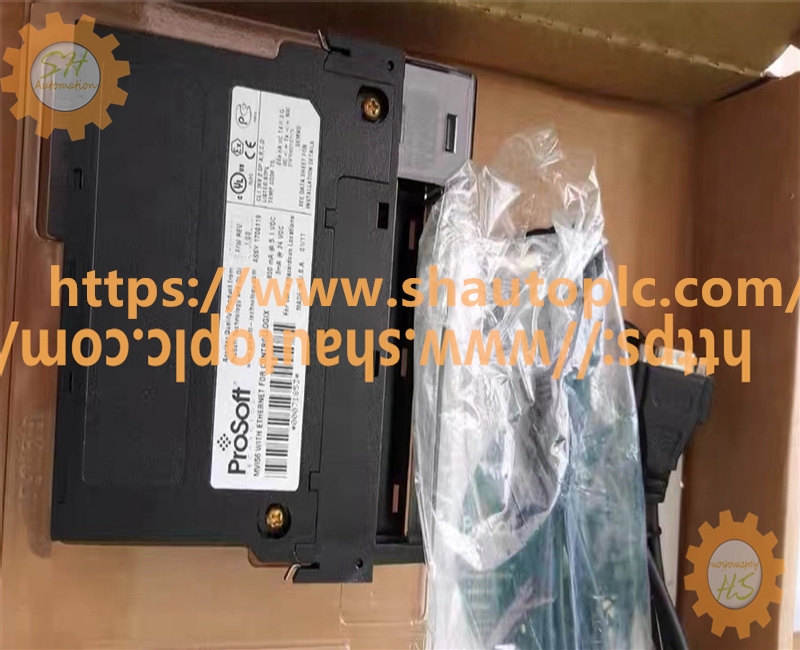
More deacriptions of this Items:
promotional 1715-IB16D rockwell allen bradley
new 1715 - I816D allen bradley
new arrival 1715 - 1B16D
wholesale 1715 I816D
allen bradley 1715-IB16 D price
data sheet 1715I816D
Factory New 17151B16D allen-bradley
manufacturer 17151816D ab
hot sell 1715-1816D a-b
diagram 1715-I816D rockwell a-b
stocked 1715-1B16D
brand new 1715-IB16-D
distributor 1715-IB16 D
new original 1715IB16D
wiring 1715 IB16D
Authentic 1715 - IB16D
Supplier 1715-IB16D 16 Pt Digital Input Module
in stock 1715-IB16D 1715 16-Pt Digital Input Module
1715-IB16D new in box
manual 1715-IB16D 1715 16 Pt Digital Input Module
Genuine 1715-IB16D 1715 Digital Input Module
New Sealed 1715-IB16D Digital Module
1715-IB16D plc module
latest 1715-IB16D Input Module
original 1715-IB16D Digital Input Module
in warehouse 1715-IB16D
retailer 1715-IB16D 1715 16-Point Digital Input Module
factory sealed 1715-IB16D 16 Point Digital Input Module
factory 1715-IB16D 1715 16 Point Digital Input Module


sh_plc@163.com Allen Bradley 1794-OE4 Flex Output Analog Module : Condition is New Original . Warranty is 12 months. Payment Method is T/T payment. Lead time is 1-2 days. We use DHL, UPS, TNT, FedEx and EMS to deliver your cargo door to door. For actual picture or technical specification, contact with us via email.
Learn More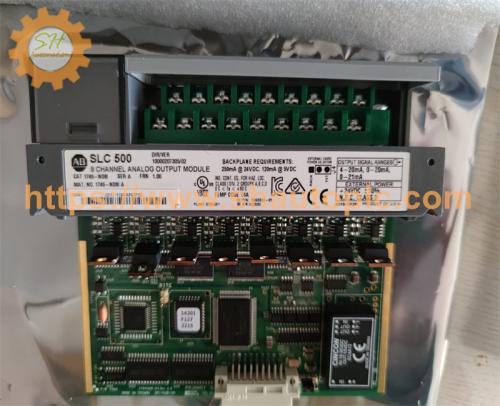
sh_plc@163.com Allen Bradley 1756-OW16I Digital Output : Condition is New Original . Warranty is 12 months. Payment Method is T/T payment. Lead time is 1-2 days. We use DHL, UPS, TNT, FedEx and EMS to deliver your cargo door to door. For actual picture or technical specification, contact with us via email.
Learn More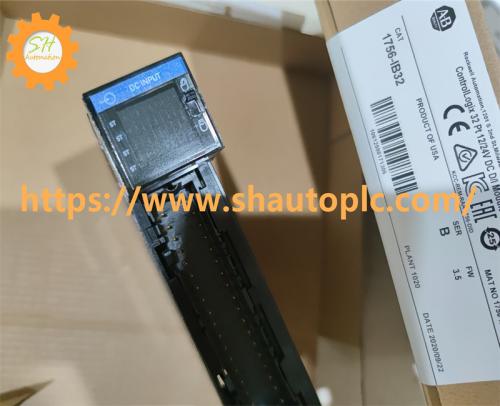
sh_plc@163.com Allen Bradley 1756-IB32 Input Module : Condition is New Original . Warranty is 12 months. Payment Method is T/T payment. Lead time is 1-2 days. We use DHL, UPS, TNT, FedEx and EMS to deliver your cargo door to door. For actual picture or technical specification, contact with us via email.
Learn More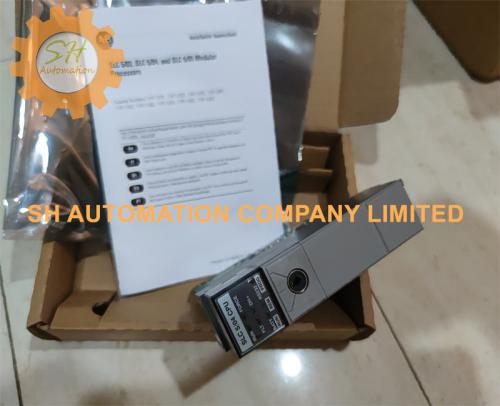
sh_plc@163.com Allen Bradley 1756-OF8 analog output module : Condition is New Original . Warranty is 12 months. Payment Method is T/T payment. Lead time is 1-2 days. We use DHL, UPS, TNT, FedEx and EMS to deliver your cargo door to door. For actual picture or technical specification, contact with us via email.
Learn More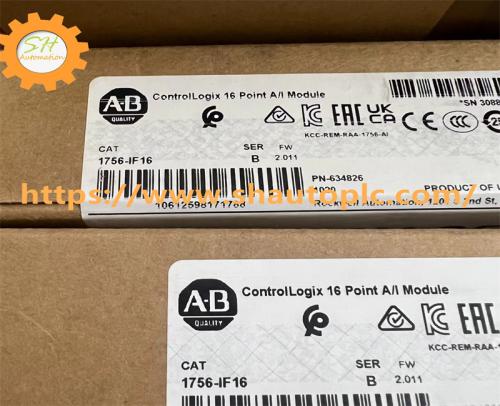
sh_plc@163.com Allen Bradley 1756-IF16 Input Module, controlLogix,Analog : Condition is New Original . Warranty is 12 months. Payment Method is T/T payment. Lead time is 1-2 days. We use DHL, UPS, TNT, FedEx and EMS to deliver your cargo door to door. For actual picture or technical specification, contact with us via email.
Learn More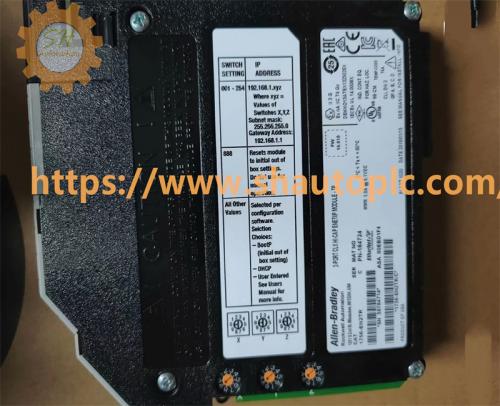
sh_plc@163.com Allen Bradley 1756-EN2TR communication module : Condition is New Original . Warranty is 12 months. Payment Method is T/T payment. Lead time is 1-2 days. We use DHL, UPS, TNT, FedEx and EMS to deliver your cargo door to door. For actual picture or technical specification, contact with us via email.
Learn More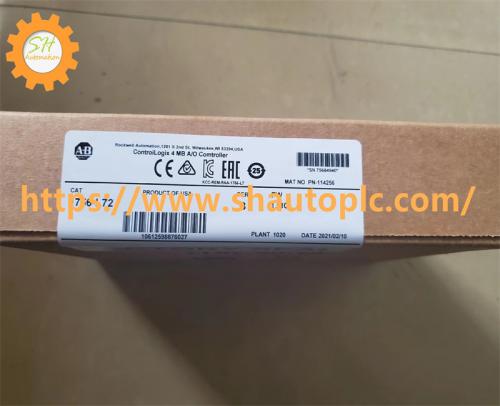
sh_plc@163.com Allen Bradley 1756-L72 controller module : Condition is New Original . Warranty is 12 months. Payment Method is T/T payment. Lead time is 1-2 days. We use DHL, UPS, TNT, FedEx and EMS to deliver your cargo door to door. For actual picture or technical specification, contact with us via email.
Learn More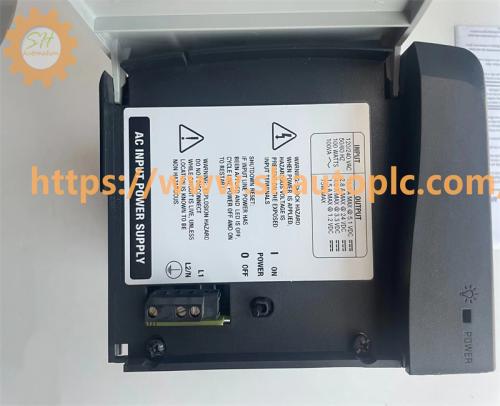
sh_plc@163.com Allen Bradley 1756-PA75 power Supply : Condition is New Original . Warranty is 12 months. Payment Method is T/T payment. Lead time is 1-2 days. We use DHL, UPS, TNT, FedEx and EMS to deliver your cargo door to door. For actual picture or technical specification, contact with us via email.
Learn More Address: WING INDUSTRY BLDG 3, TSUN WEN ROAD, TUEN MUN NT, HONG KONG
 Tel: +86 19116398948
 Email: sh_plc@163.com
 Contact: Vivi Wong